
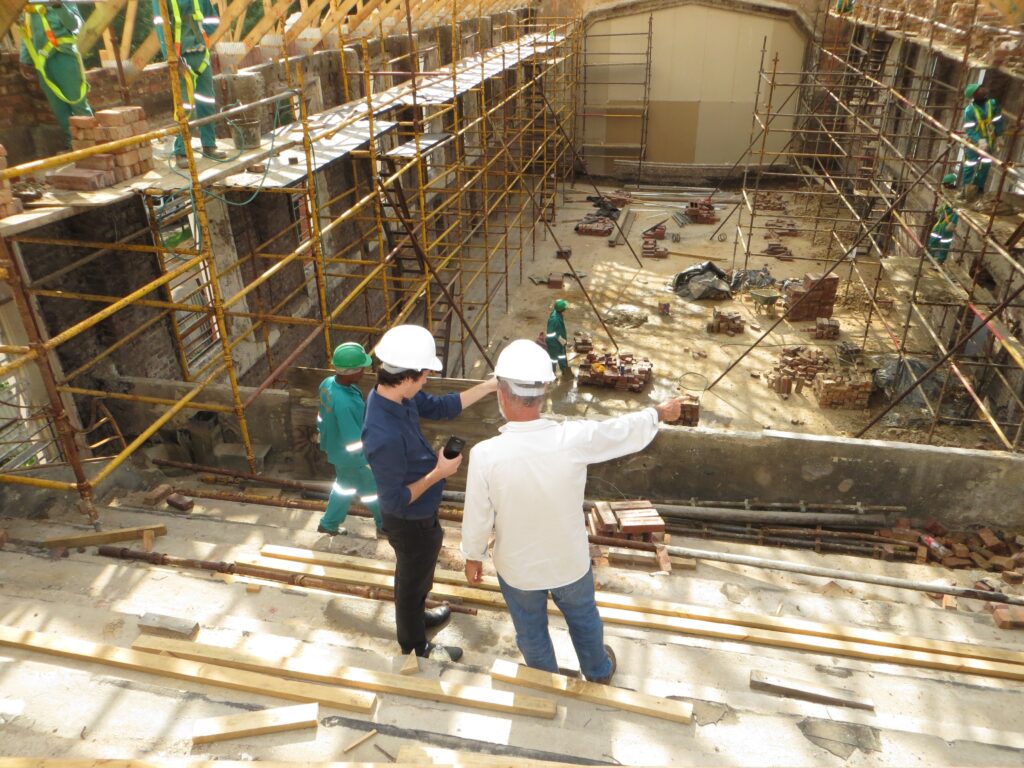
SOURCE:Photo by Mark Potterton on Unsplash
Construction is, without a doubt, a high-risk
industry. Each construction project is unique and has its own set of challenges
that can cause a variety of problems and jeopardize the project’s success. As a
result, risk management cannot be
overlooked in the construction industry. Large projects and machinery, increasing
stakeholders, expensive equipment, dangerous work, labor shortages, and
increased demands are all highly catalytic risk factors that define the
industry.
There are a
number of studies and reports that have shown the problems that the
construction industry can encounter without proper risk management. “A study published in the Journal of
Construction Engineering and Management found that cost overruns are a common
problem in construction projects, with up to 80% of projects experiencing cost
overruns. The study also found that poor risk management was a contributing
factor to cost overruns.”
Research
completed by the University of Cambridge identified and summarized that “reputation damage as a result of poor risk
management can have a significant impact on a company’s bottom line, as it can
lead to difficulty in winning new business and retaining current clients.”
All of the factors
above reiterate the necessity and importance of risk management. Risk
Management is essential to the success of the construction industry because it
helps to identify, assess, and mitigate potential risks that could negatively
impact a project. Effective risk management can help to minimize disruptions
and delays, ensure safety, manage costs, and improve the overall quality of the
finished product. By identifying and addressing risks early on, construction
companies can make informed decisions and take proactive measures to prevent or
minimize the impact of potential issues. This can ultimately result in the
successful completion of projects on time, within budget, and to the
satisfaction of all stakeholders.
Common Construction Problems without Risk
Management:
Without
proper risk management, the construction industry could encounter a variety of
problems such as:
Cost overruns: Without identifying and managing potential risks, unexpected issues can
arise that lead to increased costs and budget overruns.
Delays: Unforeseen risks can cause delays in the construction process, leading
to missed deadlines and schedule overruns.
Quality issues: Without proper risk management, the quality of the final product may be
compromised.
Safety hazards: Lack of risk management can lead to safety hazards on the construction
site, potentially causing injuries or fatalities.
Legal and regulatory issues: Construction projects must comply with a variety of laws
and regulations. Without proper risk management, projects may be in violation
of these laws and regulations, leading to legal and financial repercussions.
Reputation damage: Construction companies with a history of poor risk management may
develop a negative reputation in the industry. This can lead to difficulty in
winning new business and retaining current clients.
Key areas of risk management:
- Safety
risks: ensuring the safety of workers and the public during construction
activities. - Financial
risks: managing project costs and potential overruns, as well as
ensuring timely payment from clients and contractors. - Legal and
contractual risks: understanding and complying with laws and
regulations, and managing disputes and claims. - Schedule
risks: ensuring that the project is completed on time and within
budget. - Quality
risks: ensuring that the finished product meets the project
specifications and standards. - Environmental
risks: managing the potential impact of construction activities on the
environment. - Political
risks: assessing and mitigating potential risks related to government
policies or political instability in the area of the project. - Natural
disasters and unforeseen events risks. - Cybersecurity
risks. - Supply
chain risks.
The Role of Risk Management to Construction Executives
Construction
executives play a crucial role in achieving success in risk management. They
are responsible for setting the overall strategy and direction for risk
management within the organization, and for ensuring that risk management
processes and procedures are implemented effectively. Some specific
responsibilities of construction executives in relation to risk management
include:
Developing and implementing a comprehensive
risk management plan: This includes
identifying potential risks, assessing their likelihood and impact, and
developing strategies to mitigate or manage them.
Ensuring compliance with laws and
regulations: Construction executives are
responsible for ensuring that the company complies with all relevant laws and
regulations related to risk management, such as safety regulations,
environmental laws, and contract terms.
Communicating with stakeholders: Construction executives must communicate effectively with
stakeholders such as clients, contractors, and project team members, to ensure
that they understand the risks involved in a project, and to gain buy-in for
risk management strategies.
Monitoring and reporting: Construction executives must monitor the progress of risk
management efforts and report on their effectiveness to senior management, the
board of directors, and other stakeholders.
Allocating resources: Construction executives are responsible for allocating
resources, such as budget and personnel, to support risk management efforts.
Continuously improve risk management process:
Construction executives should continuously
review and improve the company’s risk management process, including
incorporating new technologies, methodologies, and best practices.
Overall,
construction executives play a key role in ensuring that risk management is
integrated into all aspects of the construction process, from project planning
and design to execution and closeout. This enables the construction company to
make well-informed decisions and ultimately achieve success in risk management.
HWAA can help you!
If
your construction company is ready to manage its financial risks and ensure
financial stability of projects and business, reach out to HWAA’s financial
risk management services. We specialize in providing customized financial risk
management solutions to the construction industry and can help your company.
At HWAA, we manage your risk in four easy
steps:
●
First, using
our proven methods, we will Identify
any events that may
negatively impact you, your family, your
business, or your organization.
●
Second, we
will help you Eliminate risks to
your success wherever possible.
●
Third, we
will Reduce your liability by
helping you establish techniques for
preventing or minimizing the effect of
disasters, calamities, or irregularities.
●
Lastly, we can
assist you Transfer risk through recommendations
regarding
the protection, education, and structure of
your business and other assets, that will
minimize the risk of personal or business
loss.
Contact
us today! Find out how HWAA can help your company improve financial risk
management and achieve financial stability and success in your projects.